I am still figuring out how to explain the sheer size of the career landscape after 12th board exams without sounding like a generic college brochure. The truth is messy. Choosing a path right now is terrifying because standard options often feel outdated. You might think engineering and medicine are the only safe bets. Actually, let me clarify that: the creative industry is now a highly technical, multi-billion dollar machine driving films, gaming, and government infrastructure.
It is the fastest-growing sector in India, but the path to entry is deeply misunderstood. Here is the unvarnished guide to courses, salaries, and industry realities.
The National Shift and AVGC Policy
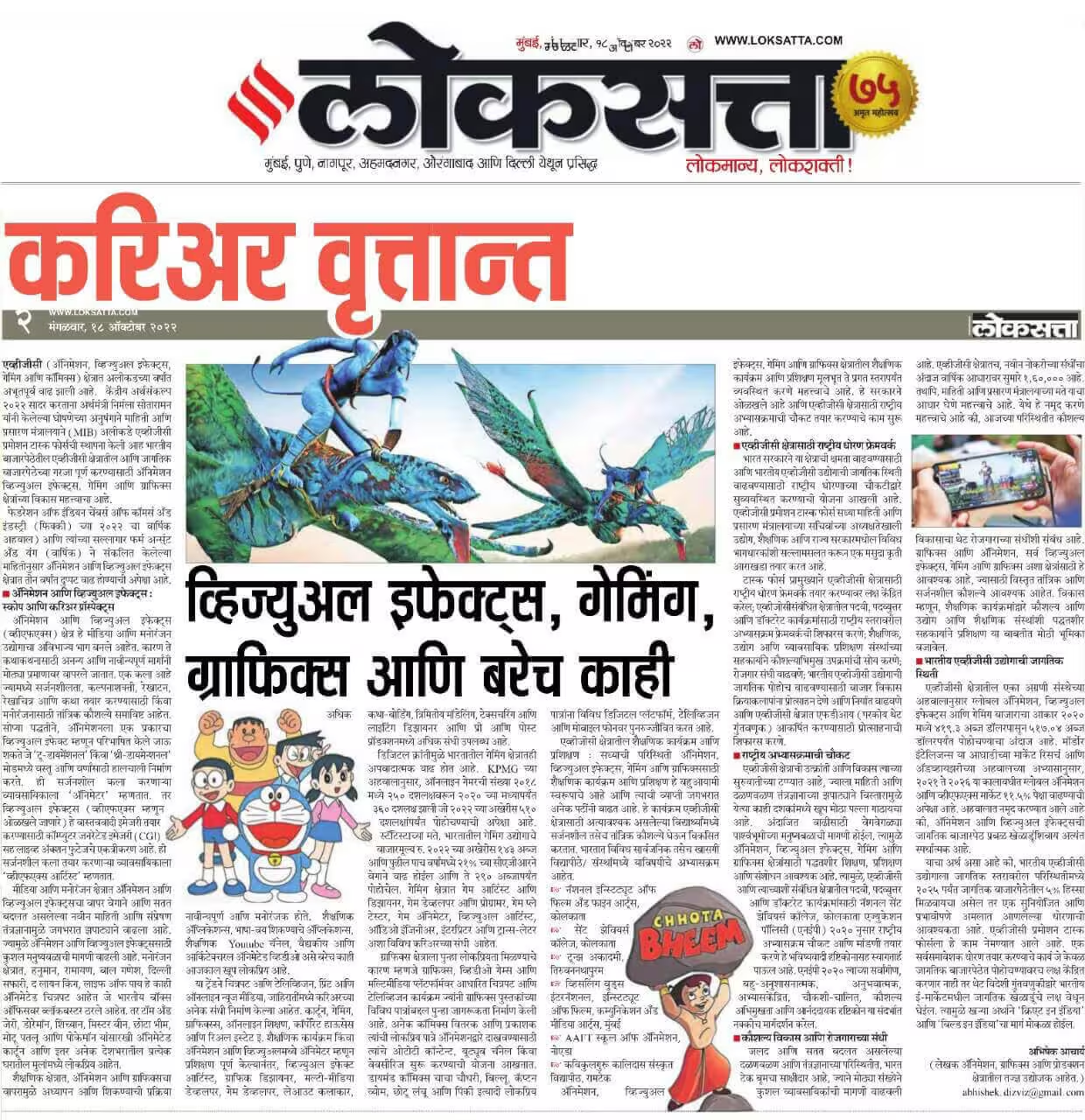
The Government of India officially recognizes this explosion through its AVGC (Animation, Visual Effects, Gaming, and Comics) Task Force. The sector needs nearly two million skilled professionals by 2030. The national ecosystem is projected to reach 26 billion dollars by the end of the decade.
Maharashtra acted first. It became the pioneer state to introduce a dedicated AVGC policy, backing it with a massive Rs 3,268 crore budget. The government aims to position Mumbai and surrounding cities as the global hub for digital content. Funding is heavily directed toward building creator labs, subsidized hardware, and skill initiatives. State leaders have explicitly noted that science and commerce are no longer the only stable paths. Creativity is a primary career choice today.
Eligibility: Breaking the Myths
People assume you need to be a traditional painter to work in 3D. This is false. A lot of roles in a studio rely entirely on logic, mathematics, and timing.
You can enter this field from any stream after 12th. Science students often excel in technical directing and fluid simulations because they understand physics. Commerce students often move into production management. Arts students lean toward character design and storyboarding. You only need basic computer literacy and a high tolerance for troubleshooting broken files.
Available Courses and Timelines
The academic choices are complicated. You have three main routes depending on your urgency to enter the workforce.
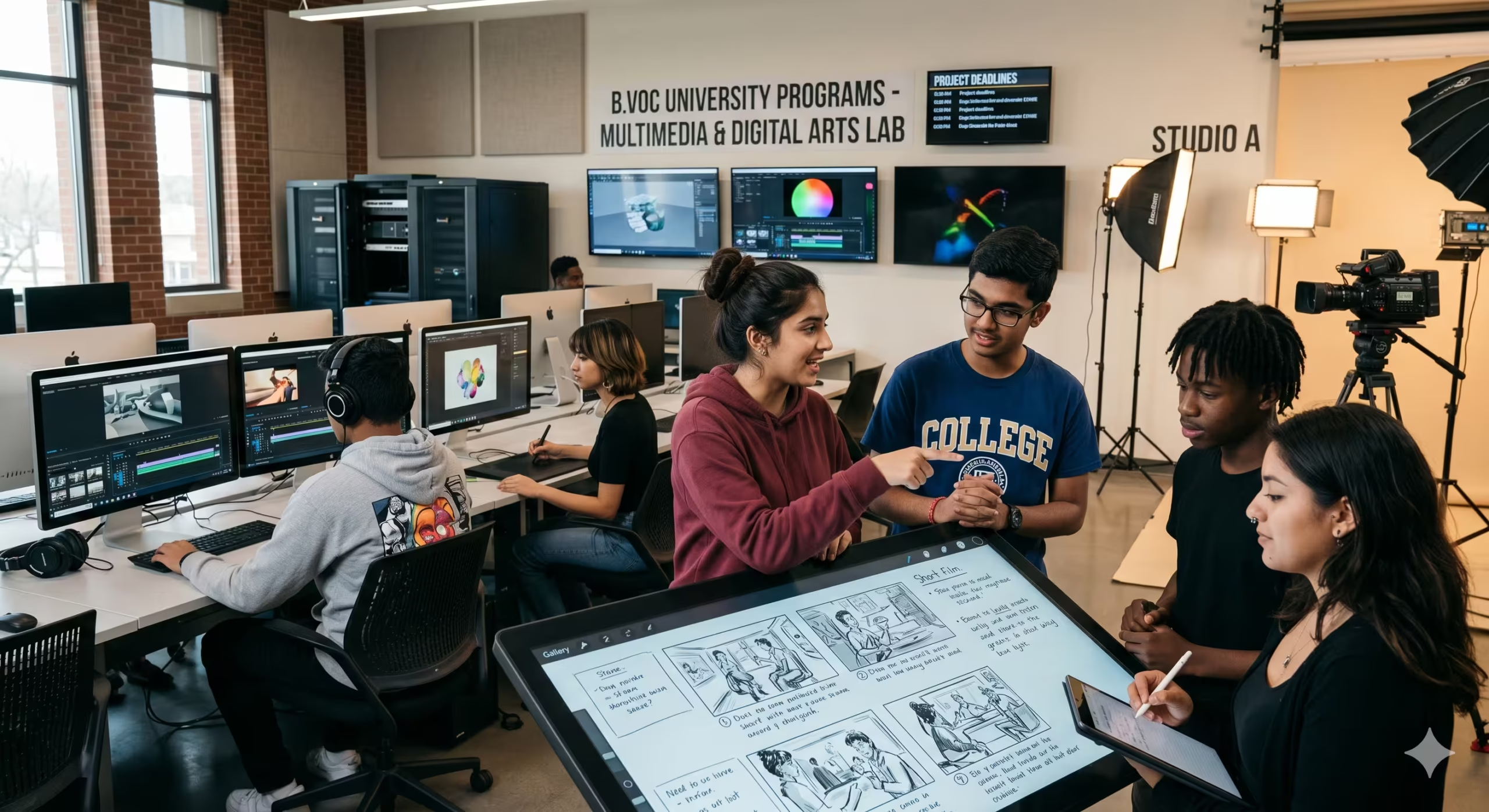
- The 3-Year B.Voc Degree: This is a formal undergraduate degree. It covers the entire studio pipeline. You learn pre-production, hard-surface modeling, character rigging, and node-based compositing. This satisfies international visa requirements if you plan to work abroad.
- The 2-Year Advanced Diploma: This strips away the academic filler. You focus strictly on software proficiency in tools like Autodesk Maya and Foundry Nuke. It is built for students who need to get onto the studio floor faster.
- The 1-Year Diploma: A brutal, fast-track program. You master Adobe After Effects, Premiere Pro, and Photoshop. This is designed for immediate entry into local advertising, social media marketing, and digital news media.
Career Paths and Salary Expectations
Salaries depend entirely on your showreel. A bad artist with a university degree earns nothing. A competent artist gets hired immediately.
- 3D Modeler: You build the digital assets using polygonal structures. Starting salary: 2.5L to 4L per year.
- VFX Compositor: You merge CGI with live-action footage. You fix bad green screens and match lighting. Starting salary: 3.5L to 6L per year.
- Character Animator: You focus purely on movement and performance. Senior roles easily command 10L to 15L per year.
- Matchmove Artist: You track physical camera movements so 3D objects stick to the live-action ground. Starting salary: 2.5L to 4L per year.
- Technical Director: You write code to fix software bottlenecks and manage render farms. Highly lucrative, reaching 20L or more with experience.
Essential Software Proficiency
Studios do not care about your theory knowledge. They care which buttons you can push to hit a deadline.
- Autodesk Maya: The undisputed standard for 3D production and rigging.
- Foundry Nuke: Node-based compositing for heavy feature film sequences.
- ZBrush: Digital clay used to sculpt high-resolution organic models like faces.
- Unreal Engine: Real-time rendering software rapidly replacing traditional render farms.
- PFTrack: Dedicated matchmoving software for camera tracking.
How DIZVIZ Production Helps You Build Your Career
Central India has dozens of training centers. Most of them are corporate franchises teaching standardized theory. DIZVIZ operates differently. We established our studio in Nagpur in 2015 specifically to nurture regional talent across Vidarbha. We are a production house first.
I should admit that the transition from a standard classroom to a high-pressure studio is jarring for most students. We eliminate that shock. Our training institute is attached directly to our working commercial studio. You learn inside an environment handling actual deadlines, hardware failures, and client revisions.
Your mentorship comes from Abhishek Acharya. He brings over two decades of professional experience from the Mumbai studio circuit and holds the Ramoji Film City Award for his achievements in the animation industry. His academic influence ensures the training holds severe weight. He serves as a Board of Studies member at Gondwana University, KKSU Ramtek, and Symbiosis International University Nagpur.
We bridge the gap between education and employment directly. We recently signed a Memorandum of Understanding with the Skill Development Ministry STEP program and Saint Jaganade Maharaj Government ITI Nagpur to conduct strict skill courses. You receive university-level academic structure combined with commercial studio speed.
Real Portfolios Produce Real Placements
Franchise centers often rely on hypothetical assignments where every student models the same object using stock imagery. At DIZVIZ, students handle live briefs. We prioritize showing actual studio work, 3D models, and green screen shots.
When the digital news portal Voice of Maharashtra launched its infrastructure across Mumbai, Pune, and Nagpur, our video editing students worked on the promotional cutdowns. When we organized the Jivhala Nukkad community event at Traffic Park, our classes designed the entire visual campaign.
Your final portfolio contains assets published in the real world. This proves to employers that you understand strict delivery deadlines. We claim 100% placement assistance because our active network of over 65 global companies explicitly trusts this production-based model. They do not want students; they want junior artists ready for the floor.
Maharashtra AVGC Policy Details
This short clip outlines how the state’s new policy initiatives directly connect with local production training to make students industry-ready.