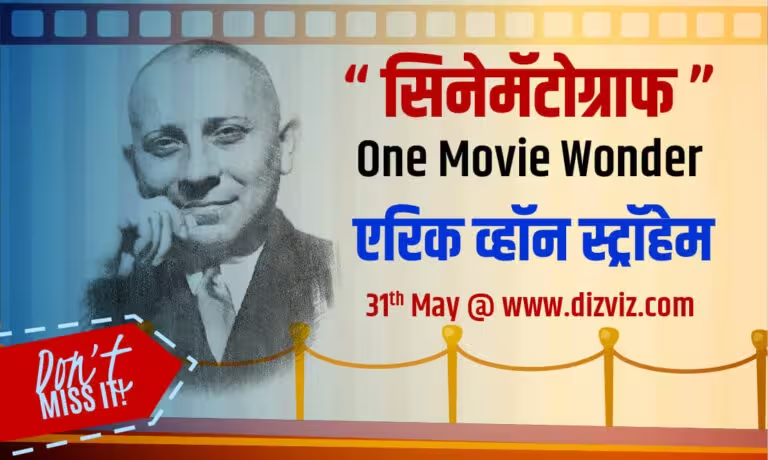
It has now been 80 years since the era of silent films ended and the era of talkies began. Yet, even today, among the films of the silent era that have not become outdated, whose impact is still felt even after so many years, and which continue to be studied, the extraordinary film “Greed” is always included.
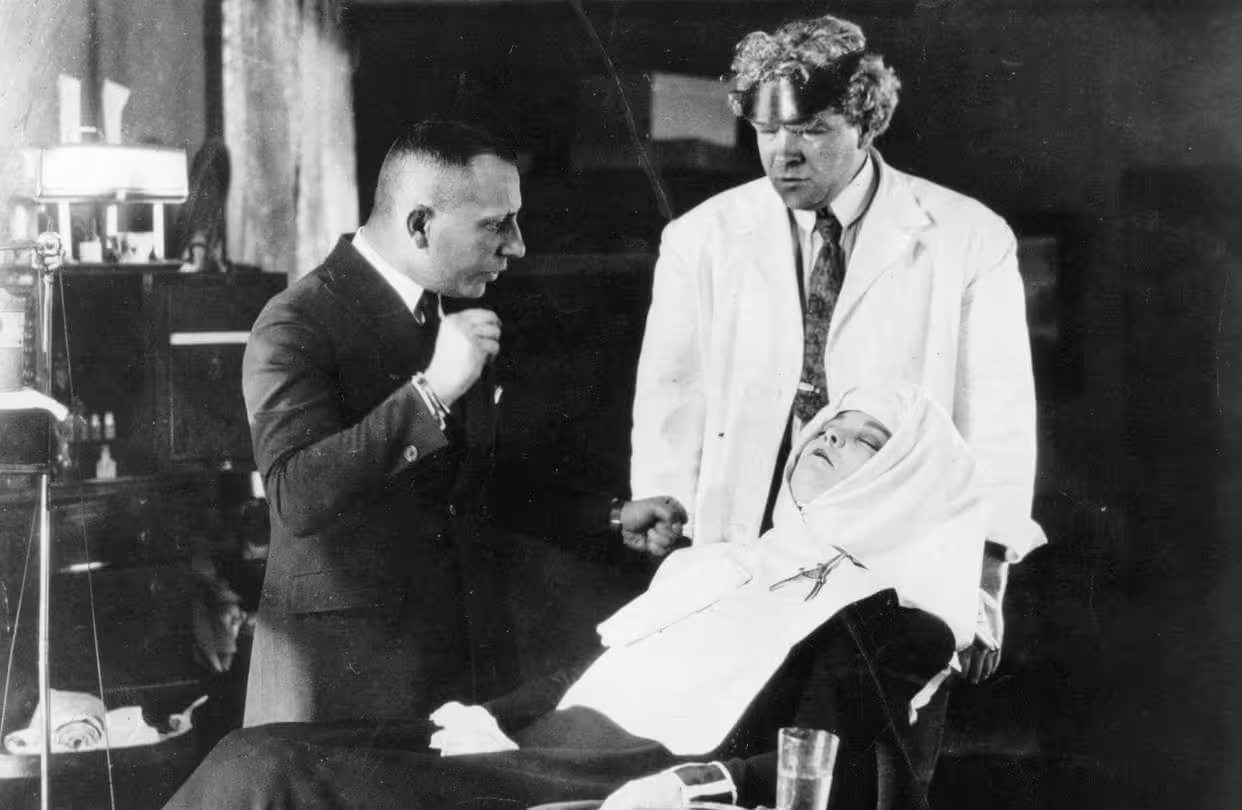
The director of this film, Erich von Stroheim, was born in Vienna in 1885. In 1909, he moved to America, where the film industry attracted him. He began his apprenticeship under D. W. Griffith and even claimed to have acted in Griffith’s “The Birth of a Nation.” Learning under such an extraordinary and imaginative director helped Erich closely understand the medium. He got his first opportunity to direct independently with “Blind Husbands” (1919). His film “Greed” (1924) became highly acclaimed—both on and off the screen. Due to his unique working style, he never got along well with producers or actors. After “Greed,” he directed films like “The Honeymoon” (1928), “Queen Kelly” (1929), and “Hello Sister!” (1933). Later, losing interest, he left America and moved to France in 1936. For the rest of his life, he only played minor roles in a few films. He died in 1957. At the time of his death, he reportedly told a journalist near him, “Dying is not bad. What is bad is that it wasted 25 years of my life!”
His opinion about Hollywood was always negative. He used to say, “In France, if you made a great film 50 years ago, you are still respected today. In Hollywood, if you remain silent for three months after one film, you are immediately forgotten.”
The story of “Greed” is based on the novel “McTeague” by American novelist Frank Norris. Norris is considered one of the pioneers of “brutal realism” in modern American literature. He was born in Chicago in 1870. At the age of 17, he went to Paris for art education and later participated in the Boer War in South Africa. While living in San Francisco, he closely observed the lives of people from the lower strata of society. He published “McTeague” at just 19 years of age. The novel’s depth, scope, and insight were extraordinary. It vividly portrays slums, small shops, hotels, brothels, and the people of San Francisco. While greed destroying human life is its central theme, it also powerfully depicts how primitive instincts dominate human behavior. It is regarded as one of the finest American novels of the 19th century. He later wrote “The Octopus” and “The Pit,” but his sudden death at just 32 left many of his ideas unfinished.
“McTeague” is a deeply compelling novel. (I have written a detailed article on this novel titled “A Caged Book,” included in my book “Light in the Wilderness.”) Erich von Stroheim was deeply influenced by it and was determined to bring it to life on screen with equal impact. Adapting such a lengthy novel into a film was extremely difficult—almost impossible during the silent era. Yet, Erich took on the challenge and created the remarkable film “Greed.”
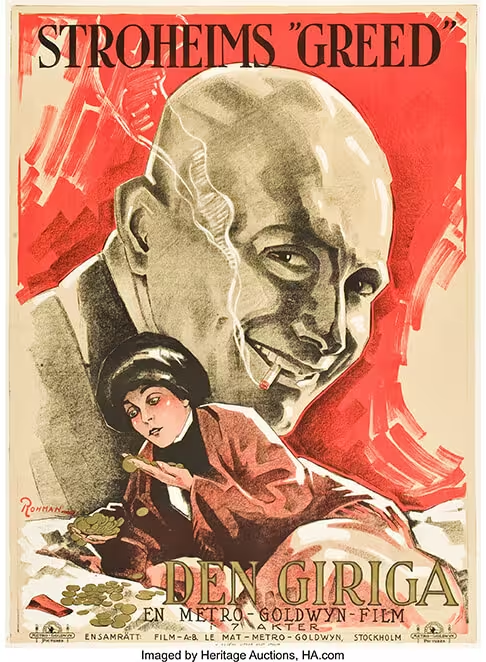
The story of making “Greed” is as fascinating as the film itself. The director was so influenced by the detailed descriptions in the novel that he tried to bring every detail into the film with complete realism. As a result, the original cut of the film was around 48 reels long, lasting approximately nine and a half hours. To maintain realism, most scenes were shot outside the studio. The climax was filmed in Death Valley, a vast alkali desert in the United States. Shooting in extreme heat was extremely difficult for the actors, and the lead actor Gibson Gowland even fell ill. During a key scene where two friends become enemies, Erich instructed them, “Fight, fight! Try to hate each other as you hate me.” He worked obsessively, and his intensity affected everyone around him. He also had constant conflicts with producers.
The original nine-and-a-half-hour version of “Greed” is now lost and is often called the “Holy Grail of cinema.” A private screening was once held, and according to a viewer, Erich did not move from his seat until the film ended. However, producers rejected such a long film for commercial reasons. Under pressure, Erich reduced its length, but even that did not satisfy them. Eventually, another editor was brought in, and the film was cut down to about two and a half hours. This version often lacked continuity, and many important elements were lost. Erich was deeply hurt and angry. He reportedly said, “The man who cut this film had nothing under his hat.” Watching the final version, he felt “as if looking at a corpse in a graveyard.” Yet, even in its shortened form, the film remains a powerful artistic experience.
The film portrays the destructive madness, distortion, and downfall caused by human greed. The protagonist, McTeague, runs a dental clinic on Polk Street in San Francisco. He is not a trained doctor and lacks intelligence. He is a slow, physically strong man with simple, mostly physical needs. Eating well and smoking his pipe satisfy him. Listening to a caged bird and playing sad tunes on a concertina are his only pleasures.
Suddenly, he falls in love, and his life changes. His friend Marcus introduces him to a beautiful girl named Trina. Marcus himself loves her but cannot express it. McTeague, however, has no such hesitation. He proposes directly and marries her. Soon after, Trina wins a lottery of $5000. Marcus feels both the loss of love and money and vows revenge.
One day, McTeague receives a notice from the health department and is forced to shut down his clinic. Unable to find another path in life, he falls into poverty. After once living comfortably, poverty becomes unbearable. His attention turns to Trina’s money, but instead of spending it, she becomes increasingly miserly. Her obsession with money grows into a disturbing fixation.
Trina’s role was brilliantly played by actress Zasu Pitts, but the most outstanding performance was by Gibson Gowland as McTeague. It is considered one of the greatest performances in silent cinema history.
As their financial struggles worsen, McTeague and Trina constantly fight. One day, in anger, McTeague kills Trina and escapes with the money. The story then turns into a chase. Police pursue him, with Marcus assisting them. McTeague flees toward Death Valley—a vast desert with no water or shelter. Carrying a horse, some food, a water can, the bag of money, and his caged bird, he enters the desert.
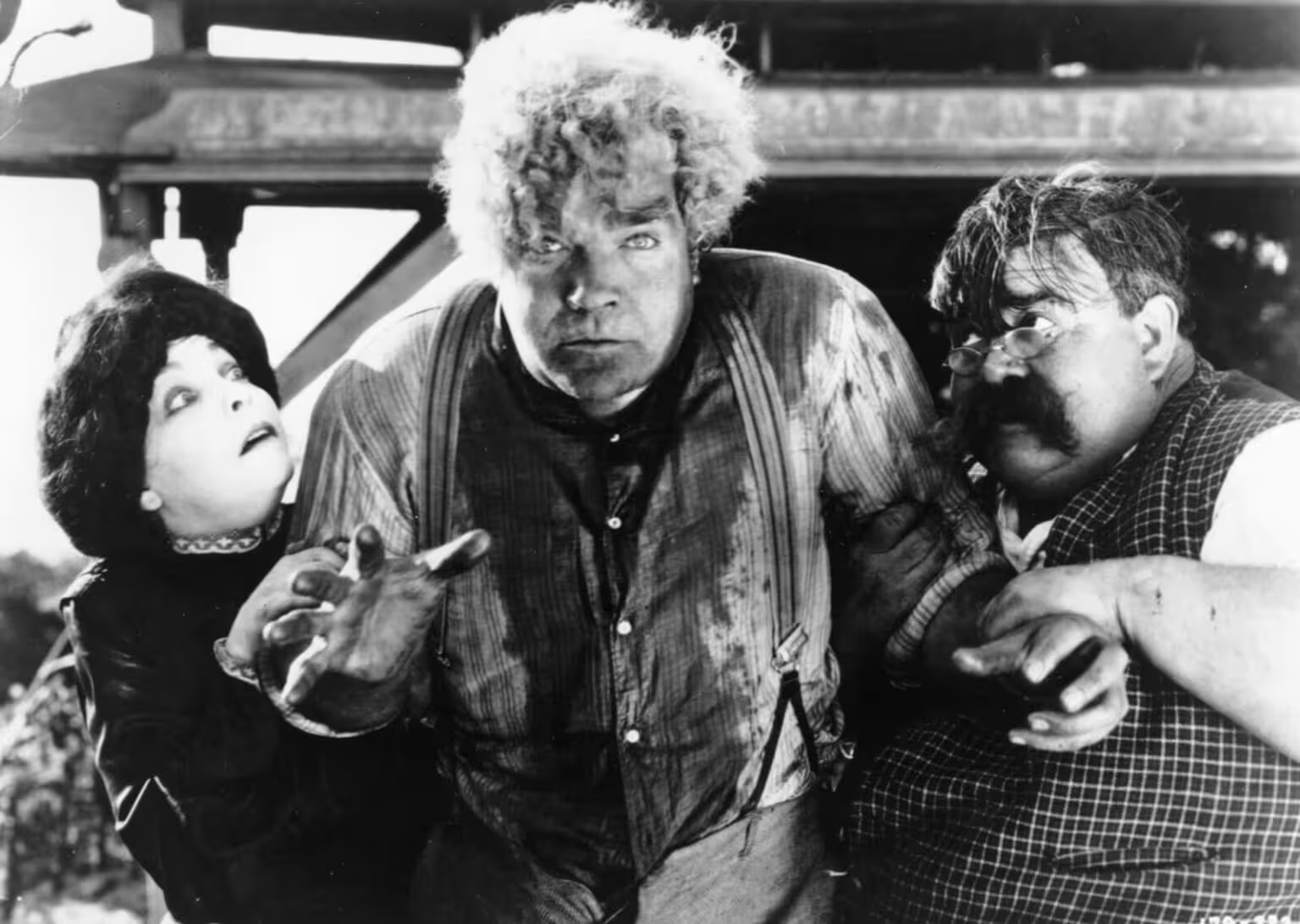
Marcus follows him, driven by revenge. Eventually, they confront each other. During the struggle, the water can is destroyed, leaving them without water. Despite this, they continue fighting for the gold. McTeague kills Marcus, but before dying, Marcus handcuffs himself to McTeague.
Now, McTeague is left in the desert, handcuffed to a dead man, with no water in sight. Death is inevitable. As his final act, he frees the bird from its cage, but it is too late. The bird flies briefly and dies on the empty water can. McTeague sits under the blazing sun, staring at the horizon, waiting for death.
The camera moves from a mid-close shot to a long shot, then an extreme long shot—showing McTeague alone in the vast desert, like a grain of sand.
The film ends on this haunting note. The story is no longer just about McTeague—it becomes the story of any human lost in the desert of greed and desire, deprived of even a drop of love.