“A story is not an accusation, nor a confession, and certainly not an adventure. For those who face death, it is not an adventure. This is the story of a generation that may have survived shells, but was destroyed by the war…”
All Quiet on the Western Front (1930 film)
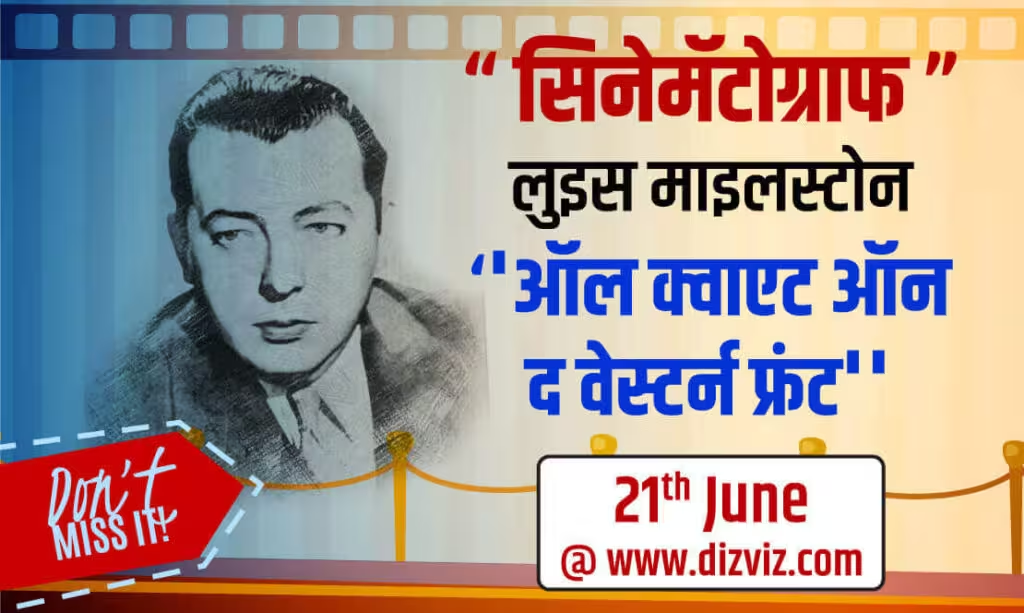
All Quiet on the Western Front (1930) is an American war drama directed by Lewis Milestone, based on All Quiet on the Western Front. It is one of the earliest and most influential anti-war films, depicting the psychological and physical toll of World War I on German soldiers. The film’s stark realism redefined war cinema and earned widespread critical acclaim.
Key facts
- Director: Lewis Milestone
- Release year: 1930
- Production company: Universal Pictures
- Academy Awards: Best Picture and Best Director (1930)
- Runtime: 152 minutes (original cut)
Plot and Themes
Set during World War I, the film follows Paul Bäumer, a young German soldier who enlists with classmates after patriotic indoctrination at school. Their initial enthusiasm collapses amid the dehumanizing brutality of trench warfare. The story chronicles Paul’s disillusionment and loss of innocence, culminating in his quiet death near the war’s end—a symbol of the futility of the conflict. Themes include the betrayal of youth, the alienation of soldiers, and the universal devastation of war.
Production and Cinematic Innovations
Milestone’s direction employed fluid camera movement, dynamic tracking shots, and stark battlefield realism that were groundbreaking for early sound cinema. The production used large-scale battle sets in California to evoke the Western Front. Sound design—particularly the interplay between silence and bombardment—amplified the soldiers’ terror and exhaustion, setting a new standard for war film authenticity.
Reception and Legacy
Upon release, the film received critical acclaim for its artistry and humanist message but faced bans and protests in Nazi Germany and other countries for its pacifist stance. Today it is preserved in the United States National Film Registry as a culturally significant work. All Quiet on the Western Front remains a landmark in anti-war cinema and an enduring critique of nationalist militarism.
All Quiet on the Western Front (1930 film)
All Quiet on the Western Front (1930) is an American war drama directed by Lewis Milestone, based on All Quiet on the Western Front. It is one of the earliest and most influential anti-war films, depicting the psychological and physical toll of World War I on German soldiers. The film’s stark realism redefined war cinema and earned widespread critical acclaim.
Key facts
- Director: Lewis Milestone
- Release year: 1930
- Production company: Universal Pictures
- Academy Awards: Best Picture and Best Director (1930)
- Runtime: 152 minutes (original cut)
Plot and Themes
Set during World War I, the film follows Paul Bäumer, a young German soldier who enlists with classmates after patriotic indoctrination at school. Their initial enthusiasm collapses amid the dehumanizing brutality of trench warfare. The story chronicles Paul’s disillusionment and loss of innocence, culminating in his quiet death near the war’s end—a symbol of the futility of the conflict. Themes include the betrayal of youth, the alienation of soldiers, and the universal devastation of war.
Production and Cinematic Innovations
Milestone’s direction employed fluid camera movement, dynamic tracking shots, and stark battlefield realism that were groundbreaking for early sound cinema. The production used large-scale battle sets in California to evoke the Western Front. Sound design—particularly the interplay between silence and bombardment—amplified the soldiers’ terror and exhaustion, setting a new standard for war film authenticity.
Reception and Legacy
Upon release, the film received critical acclaim for its artistry and humanist message but faced bans and protests in Nazi Germany and other countries for its pacifist stance. Today it is preserved in the United States National Film Registry as a culturally significant work. All Quiet on the Western Front remains a landmark in anti-war cinema and an enduring critique of nationalist militarism.
About the Director
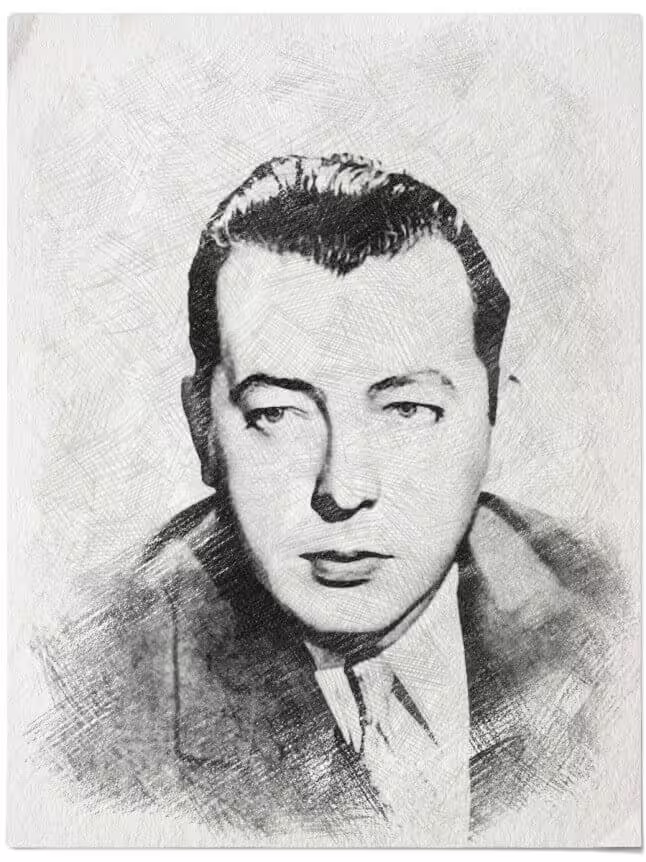
The film was directed by Lewis Milestone, based on the famous novel by Erich Maria Remarque. Published in 1929, the novel gained worldwide recognition, selling over 2.5 million copies and being translated into 25 languages within two years.
Born in Russia in 1895, Milestone moved to the United States before World War I. He worked with the U.S. Signal Corps, gaining close insight into soldiers’ lives. His early works included silent films, and he won an Academy Award for Two Arabian Nights (1927).
However, it was All Quiet on the Western Front (1930) that brought him global fame and opened a new chapter in war cinema. He later adapted works of renowned writer John Steinbeck, including Of Mice and Men and The Red Pony. Milestone passed away in 1980.
About the Author
Erich Maria Remarque was born in Germany in 1898. At just 18, he was drafted into the army and experienced the horrors of World War I firsthand. These experiences deeply influenced his writing.
After the war, he worked as a teacher, librarian, and journalist. His novel All Quiet on the Western Front reflects the emotional and psychological trauma of war. The book was banned and burned by the Nazis in 1933, forcing Remarque to leave Germany. He later settled in Switzerland, where he spent the rest of his life.
Making of the Film
The film was created during the transition from silent to sound cinema. Initially planned as a silent film, it was later converted into a talkie.
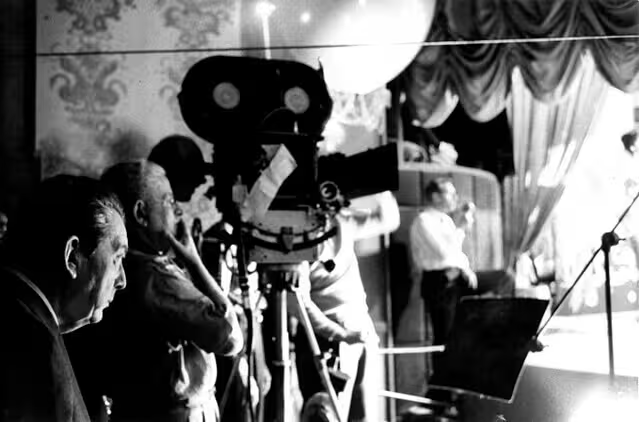
Milestone conducted extensive research to ensure realism. He consulted former German soldiers for accuracy in uniforms, weapons, and battlefield behavior. Large-scale war scenes were shot across hundreds of acres in California, involving over 2,000 extras.
Interestingly, the film avoided background music to maintain realism, though some theaters later added their own soundtracks. The film received critical acclaim but was banned in Germany and Italy for several years.
Story Overview
The film follows young students who are inspired by patriotic speeches to join the army. Characters like Paul, Kropp, and their friends enter the battlefield with romantic ideas about war.
However, reality hits hard. Their strict commander trains them harshly, stripping away their innocence and turning them into soldiers.
On the battlefield, they witness death, fear, and destruction. Friends die suddenly, and the emotional shock leaves a lasting impact. War forces them to lose their humanity and become emotionally numb.
Themes of the Film
 1. Loss of Humanity
War transforms humans into emotionless beings. Soldiers are trained to suppress fear and empathy.
2. Moral Decline
In one scene, a soldier wants another’s boots simply because he will not need them anymore. War destroys moral values.
3. Meaninglessness of War
Paul questions why the war is being fought. Millions die for the ambitions of a few powerful people.
Powerful Scenes
One unforgettable scene shows Paul hiding in a trench where he kills an enemy soldier in panic. Later, realizing the soldier was just like him, he feels deep guilt and regret.
He says, “Why were we never told that you are just like us? Forgive me, comrade…”
This moment highlights the emotional and psychological damage caused by war.
Final Scene (Iconic Ending)
In the final scene, Paul sees a butterfly and tries to catch it. As he reaches out, he is shot and dies instantly.
On that same day, the army report states:
“All quiet on the Western Front.”
This line carries a deeper meaning — nothing happened… except that many lives were lost.
Author
Abhishek Acharya
Dizviz Productions, Nagpur